
I was born in the late ’1990s on the beautiful island of Puerto Rico, more than a century after the United States began its occupation of Puerto Rico in 1898. Officially designated as an “Estado Libre Asociado,” Puerto Rico exists in a political gray area – neither fully integrated into the United States nor independent.1 This colonial reality shaped not only everyday life on the island, but also the scientific landscape I would eventually enter.
If you are familiar with what constitutes a colony, you are aware that a colony is never expected to excel at the level of the colonizing nation. A colonial power does not expect the colony to reach the same level of economic development, political power or autonomy as the governing country. For example, residents of Puerto Rico cannot vote in U.S. presidential elections unless they reside in the “mainland” United States. Despite this, I decided to pursue science, motivated by the hope that Puerto Rican minds—slowly displaced to the “mainland”—could still contribute meaningfully to the world of research.
My scientific journey started at the University of Puerto Rico amidst the fight against the installment of Ley Promesa2 by the United States Congress. This law installed an oversight board of American-imposed people that would determine where our taxpayer money was going, where money would be cut, and blatantly reject laws passed in our own government. From that point on, it became clear that voting for a governor or senators on the island was futile. Our government did not wield the sovereignty the Americans claimed it had.
The University of Puerto Rico and the Health Department suffered cuts of millions of dollars that left Puerto Ricans questioning their future.3 Many students left the public university unable to pay the rise in enrollment costs for degrees they were not even sure they could make use of afterwards.4 The older population of the island grew worried about the increasing “fuga de cerebros” (“brain drain” or human capital flight), which started limiting access to medical specialists and scientific contributions to the island.5
Science and survival under hurricane remnants
These contemporary challenges echoed a longer history of systemic exploitation. Amidst this “fuga de cerebros” (brain drain), major cuts to education and health, and student-led protests that resulted in younger activists being placed under government surveillance (historically referred to in Puerto Rico as “carpetas”), doing science in Puerto Rico became even harder. By September 2017, the island was struck by two of the strongest hurricanes it had seen in decades, Irma and María. These hurricanes left widespread devastation, months without electricity, scarce water and disrupted communications. Many places, including the university, were left without electricity for months. Classes resumed three months later. The university now had a student body forced to meet basic needs on their own in an environment without power, with scarce access to water and with limited communication and internet —conditions exacerbated by inadequate infrastructure and support.
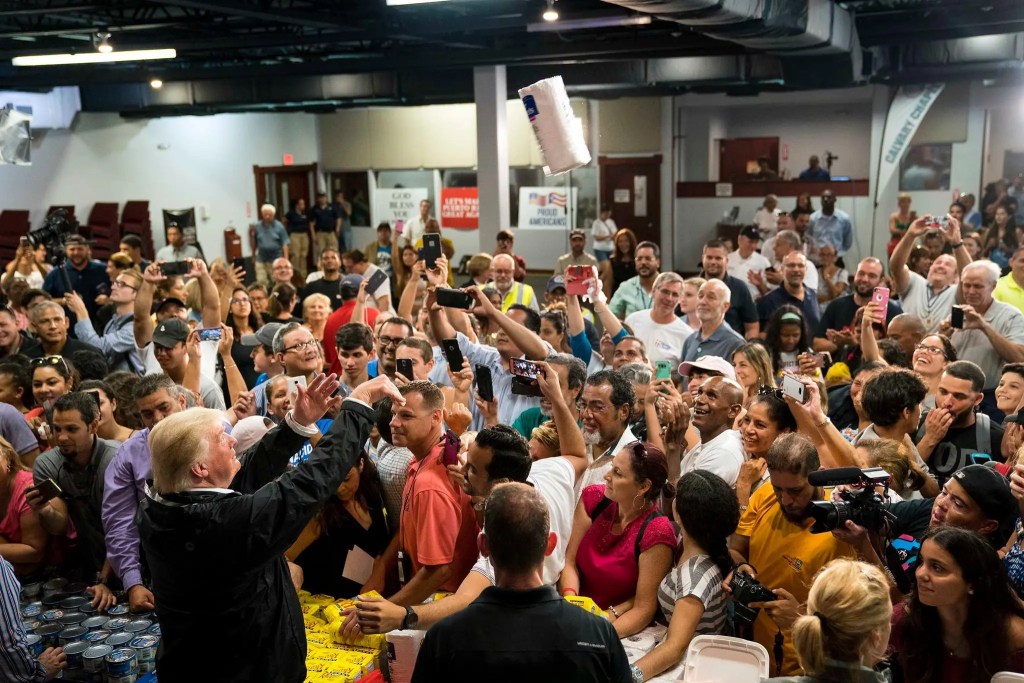
Donald Trump throws paper towels to Puerto Ricans impacted by Hurricane María. From: Doug Mills/The New York Times
During this time, I was working in a biochemistry lab at the University of Puerto Rico. My colleagues and I—a group of six students, four of whom (including myself) are now graduate students at the University of Minnesota—had to develop ways to preserve cell cultures that required electricity and sterile conditions. To manage this, we transported some samples to other universities where power had been restored or backup generators were available. For sterile work, we relied on spirit lamps because the gas lines were down, and we avoided using water entirely since it was either unavailable or we could not autoclave it. Meanwhile, the local government and the president of the United States at the time, Donald Trump, were widely criticized for their inadequate response – symbolized by Trump tossing paper towels to people in San Juan, which many saw as a tone-deaf gesture rather than real assistance.6 More students either migrated to the “mainland” or abandoned their degrees altogether.
Unfortunately for me, it was that moment that I too decided I needed to look elsewhere. This is the lab I inherited in my native land—a lab that never had a chance and a group of scientists quickly being displaced to contribute primarily to science done by the same institutions that once experimented on us.7 These experiences made me reflect on a longer, darker history—a history where Puerto Ricans were not only neglected but actively exploited in the name of science.
Rhoads to extermination
While I was struggling to save cells in a powerless lab, Puerto Rico’s scientific and medical history was already scarred by decades of unethical experimentation. One of the earliest and clearest documented acts of such experimentation occurred in the 1930s with Dr. Cornelius Rhoads. A renowned oncologist from the Rockefeller Institute, Rhoads wrote a shocking letter in 1931 to colleagues in which he stated:
“What the island needs is not public health work but a tidal wave or something to totally exterminate the population…I have done my best to further the process of extermination by killing off eight and transplanting cancer into several more.”
Dr. Cornelius Rhoads.8
Though “Dr.” Rhoads later claimed he was “writing fiction,” the content of his letter and the context of his work suggested otherwise. Investigations revealed that he conducted experiments on Puerto Rican patients, often without informed consent, and some patients were deliberately harmed through cancer injections. Despite this, Rhoads continued to practice medicine, advance his career and even had prestigious medical awards named after him.9
His actions exemplify a broader pattern in which Puerto Ricans were treated as subjects for experimentation rather than as human beings with rights—a pattern that included medical neglect, sterilization programs and pharmaceutical testing in the decades that followed. The legacy of Rhoads’ work loomed over Puerto Rican science and medicine for generations, creating an environment in which trust in scientific institutions was deeply compromised. This is the context I inherited as a young scientist trying to conduct ethical research on the island.

A photocopy of the original letter written by Rhoads in 1931. (Image from Archivo Nacional de Puerto Rico/Libros 787)
Do not let the “inferior race” reproduce: Mass sterilization
The abuses perpetrated by Rhoads were an early example of a consistent pattern where Puerto Ricans were repeatedly treated as subjects for experimentation. This mindset did not disappear with his era; it simply evolved into new forms of medical and reproductive control. One of the most visible manifestations of this was the mass sterilization of Puerto Rican women, carried out under the guise of public health programs. These actions, along with later pharmaceutical trials such as testing the birth control pill on Puerto Rican women, reflected a long-standing colonial logic in which the population was regulated, manipulated and experimented upon by outside powers.
Seen as an “inferior race” by our American colonizers, approximately one-third of age-appropriate Puerto Rican women were forcibly sterilized in what became widely known as “la operación” between the 1930s and the 1970s.10 Both my grandmothers were born and lived under this mass sterilization movement. This surge of procedures was not simply a matter of individual choice. Sterilization was legalized under legislation influenced by eugenic ideas, framing rapid population growth as a problem to be solved through medical intervention.11 Sterilizations were often promoted as routine or the only accessible option and because women were not fully informed that the procedure was irreversible, a significant portion of those sterilized did not consent with a true understanding of the consequences.12
In addition to sterilization programs, Puerto Rican women were used as test subjects in the early clinical trials of the modern birth control pill—a medical experiment widely criticized for its ethical shortcomings.13 Based on my maternal grandmother, she took the pill at the time, trusting that it had undergone proper laboratory testing and believing, perhaps naively, that it would reliably prevent pregnancy. She was completely unaware of the many unreported side effects experienced by women in the trials.
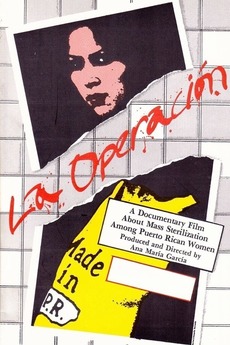
Front cover of the Puerto Rican film-documentary “La operación” directed by Ana María García in 1982. Talks about the forced mass sterilization of Puerto Rican women. (Photo by unknown)
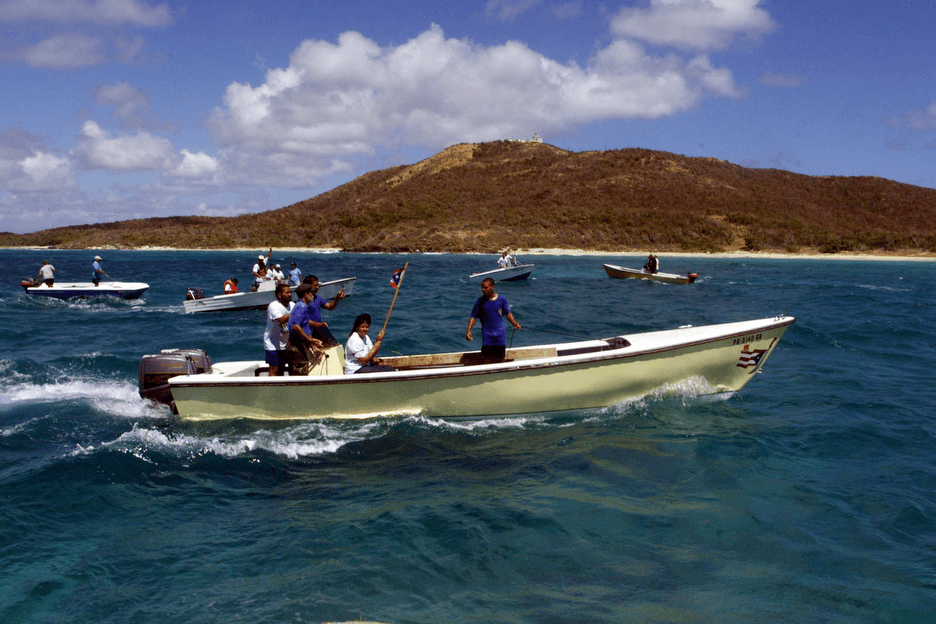
“Viequenses” fight to kick out the U.S. Navy from the island municipality of Vieques. (1999). (Image by J. Ismael Fernández, El Nuevo Día: Archivo Histórico)
“¡Fuera la marina de Vieques!” (U.S Navy out of Puerto Rico!)
The pattern of treating Puerto Ricans as experimental subjects extended beyond medicine and reproduction. Beginning in 1941, the U.S Navy saw the island municipality of Vieques as the perfect piece of military practice terrain.14 Over the next six decades, much of the population was forcibly displaced to the main island or confined to the remaining 25% of their land, disrupting communities, livelihoods and cultural practices. Women in Vieques lived in constant fear of sexual violence from stationed Marines, often hiding machetes under their pillows for protection.15 The environmental and health consequences of bombings and live-fire exercises were severe: soil and water contamination, unexploded ordnance, and chronic exposure to toxic substances affected generations of residents. The final escalation came when a bomb test went wrong, further endangering the already vulnerable population.
Growing up, I watched as the media documented the resistance of Vieques. On the television, fishermen navigated their small boats to confront heavily armed forces, a vivid display of Puerto Rican resilience. The remnants of a toxic legacy from decades of bombing is still visible today with contaminated soil and water at the beaches and residents experiencing elevated rates of cancer, respiratory illnesses and chronic conditions linked to prolonged exposure.16
This is the lab I inherited…
This is the lab I inherited—one where my colleagues and I were meant to be the experiment, never the brilliant minds moving science to an ethical practice. This is the lab I inherited—one where I now have to speak and write in the language of the oppressor in the hopes of my efforts to be heard.
- Welcome to Puerto Rico!. “Puerto Rico’s Commonwealth Status: What is the Estado Libre Asociado?”. https://welcome.topuertorico.org/reference/ela.shtml ↩︎
- Congress. “PROMESA”. Government. U.S. Government Publishing Office, December 27, 2022. https://www.govinfo.gov/app/details/COMPS-12101 ↩︎
- Centro de Periodismo Investigativo. “Administración Trump anuncia recorte millonario e inmediato a universidades en Puerto Rico y Estados Unidos”. Víctor Rodríguez Velázquez. September 10, 2025. https://periodismoinvestigativo.com/2025/09/trump-recorte-millonario-universidades-puerto-rico/# & WAPA TV. “Junta advirte sobre recortes millonarios en fondos federales y posible estancamiento económico”. Los Datos son los Datos. May 16, 2025. https://wapa.tv/programas/losdatos/junta-advierte-sobre-recortes-millonarias-en-fondos-federales-y-posible-estancamiento-econ-mico/article_b2a54483-b0ab-4015-8cb0-a1f21ec36e0c.html ↩︎
- Sin comillas. “La UPR ha perdido 20,000 estudiantes en seis años”. March 29, 2023. https://sincomillas.com/la-upr-ha-perdido-20000-estudiantes-en-seis-anos/ ↩︎
- El Nuevo Día. “¿Fuga de cerebros? La población puertorriqueña con mayor escolaridad emigra con mayor frecuencia”. Ricardo Cortés Chico. June 13, 2021. https://www.elnuevodia.com/noticias/locales/notas/fuga-de-cerebros-la-poblacion-puertorriquena-con-mayor-escolaridad-emigra-con-mas-frecuencia/ ↩︎
- CNN Español. “Trump lanza rollos de papel en Puerto Rico”. October 4, 2017. https://cnnespanol.cnn.com/video/cnnee-cafe-video-del-dia ↩︎
- War Against All Puerto Ricans. “Chapter 5: A good career move”. Nelson A. Denis. 11. 2015. & Revista Medicina y Salud Pública. “La historia olvidada sobre los programas ocultos de experimentación científica en puertorriqueños”. Isabelia Farías. January 5, 2025. https://medicinaysaludpublica.com/noticias/humanidades-medicas/la-historia-olvidada-sobre-los-programas-ocultos-de-experimentacion-cientifica-en-puertorriquenos/17659#:~:text=La%20historia%20olvidada%20sobre%20los%20programas%20ocultos%20de%20experimentaci%C3%B3n%20cient%C3%ADfica%20en%20puertorrique%C3%B1os & “Puerto Rico and the United States, 1917-1933”. Truman R. Clark. Pittsburgh, PA: University of Pittsburgh Press, 1975. 152-153. ↩︎
- Douglas Starr, “Revisiting a 1930s Scandal, AACR to Rename a Prize.” Science 300, 573-574(2003). DOI:10.1126/science.300.5619.573 ↩︎
- Douglas Starr, “Revisiting a 1930s Scandal, AACR to Rename a Prize.” Science 300, 573-574(2003). DOI:10.1126/science.300.5619.573 ↩︎
- “Sterilization of Puerto Rican women: A selected, partially annotated bibliography”. Florita Z Louis de Malave. 1999. https://www.library.wisc.edu/gwslibrarian/bibliographies/sterilization/ ↩︎
- The Daily Herald. “Between 1930 and 1970, aroundof women in Puerto Rico were sterilised”. December 28, 2023. https://www.thedailyherald.sx/regional/between-1930-and-1970-around-1-3-of-women-in-puerto-rico-were-sterilised ↩︎
- Journeys at Dartmouth. “Reproductive Injustices against Latina women in the 1900s”. F002SV0. April 20, 2018. https://journeys.dartmouth.edu/lats3ramsden/2018/04/20/reproductive-injustices-against-latina-women-in-the-1900s/ ↩︎
- HHR Journal. “From Forced Sterilization to Fertility Technology: Addressing Medical Mistrust in Puerto Rico”. Isabella Long. April 21, 2025. https://www.hhrjournal.org/2025/04/21/from-forced-sterilization-to-fertility-technology-addressing-medical-mistrust-in-puerto-rico/ ↩︎
- The Guardian. “‘I thought they’d kill us’: how the US navy devastated a tiny Puerto Rican island”. Wilfred Chan. May 1, 2023. https://www.theguardian.com/world/2023/apr/30/vieques-puerto-rico-us-navy-base-training & El Nuevo Día. “Vieques: 20 años sin la Marina”. Archivo Histórico de El Nuevo Día. https://vieques.elnuevodia.com/#/es/ ↩︎
- The Guardian. “‘I thought they’d kill us’: how the US navy devastated a tiny Puerto Rican island”. Wilfred Chan. May 1, 2023. ↩︎
- The Guardian. “‘I thought they’d kill us’: how the US navy devastated a tiny Puerto Rican island”. Wilfred Chan. May 1, 2023 & El Nuevo Día. “Vieques: 20 años sin la Marina”. Archivo Histórico de El Nuevo Día. https://vieques.elnuevodia.com/#/es/ ↩︎