


How Hmong Women Reconcile Traumas Through Retelling Supernatural Stories
On a Sunday afternoon in April, my partner and I arrived at our rental home in St. Paul, MN from Wausau, WI, where we returned from a Hmong traditional healing ritual for me. As usual, my partner parked the car on the street. I gently opened the door and slid my body out of the car to prevent myself from falling. When I stood firm on the ground, I slowly turned to look at our rental house and thought, “this walk will exhaust my lungs.” When I was healthy, I could walk for miles around Phalen Lake. But now a distance of a few yards was beyond my ability.
I slowly glanced at the house, but my eyes were fixated on something unusual that stood in between me and the house. It was a thin and taller figure who wore traditional Hmong clothes: a black long-sleeve top, a black pair of pants, and a darker shade of red sash on the waist. For Hmong people, a few of the things that trigger intense fear include sighting mysterious figures in Hmong clothes, especially funeral clothes. However, I was not struck by fear. Rather, I was surprised to see someone had waited for us. I kept my eyes locked on the figure while standing on my feet. “Why are you looking at me like that?” My partner was abashed; he thought I was staring at him as he carried our luggage home. The second he walked past me, the figure disappeared completely from my sight. Immediately, I knew the figure was not from our humanly world, but the spiritual realm. Because Hmong clothes are not unisex, I was sure he was a man. I kept everything to myself.
Transborder love is a relationship that is personally and profoundly tied to a loved one across time and space by virtue of shared lived experiences pertaining to displacement and injustices, which bounds the living and the dead together through means of love.
Weeks later, my mother-in-law asked her uncle to perform a shamanistic ritual for me at my in-law’s place in Wausau, to which he responded that some larger spiritual forces already informed him about someone asking for a big favor. He accepted the request. After the ritual, he told my in-laws and my parents that my Yawg (paternal grandfather) visited me, but I did not recognize him because I have never met him. However, he knew me and my whereabouts since I visited his grave in Laos in 2018. After this conversation, my mother insisted that my partner drive us to Green Bay, WI where her aunt and uncle would treat me with some magical tea. While in the car, I asked my father why Yawg visited me. He responded, “Because he loves you. Those who are gone love you, so that’s why they come back to visit.” What my father said made no sense. I was unconvinced that such enactment was love.
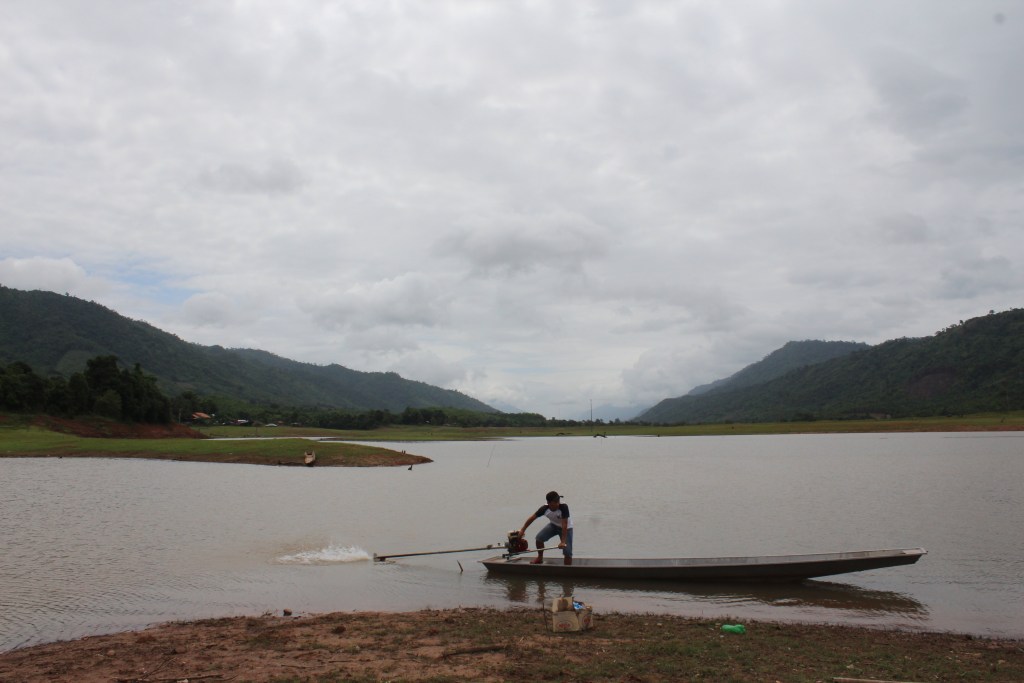
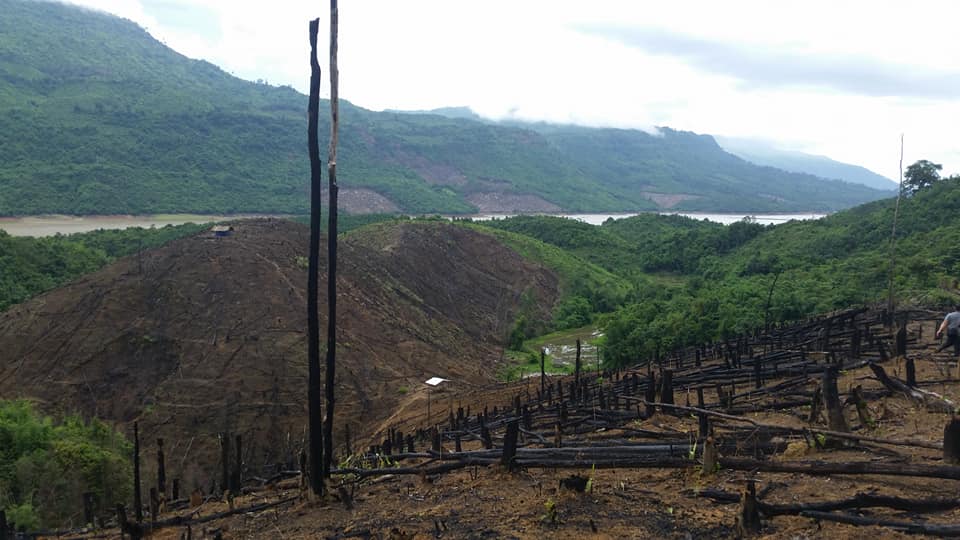
Regardless, I confessed to my parents that prior to seeing the figure, I had shared my last wishes with my partner because I knew my body would not hold on any longer. I wished to wear a set of traditional Hmong clothes upon my death so I could journey to find my Pog (paternal grandmother) in the afterlife. My father grew furious upon hearing about my last wishes. He was inflamed that I had called for my deceased Pog. I had done something forbidden: preparing for my own funeral. I had crossed the boundaries between the living and the dead and had already started my forbidden journey into the afterlife.
We were still on highway 29 eastbound and my father stayed silent for what felt like forever. Silence is his default mode of nonverbal communication when he has lost his patience but is still cautious about his words. Abruptly, he said that we must be back to Wausau before midnight. I later learned that my father undid my wishes that night when he got home to Wausau. I could only imagine that he must have begged for forgiveness from his deceased parents for my naïve calling and for planning my own funeral and life after death. His deceased parents’ transborder love for me was intercepted by his own love for me along with his assumptions that his parents, too, would love him enough to allow him to be heard, and to forgive a grandchild through his begging.
My understanding of how transborder love manifests in supernatural events became less opaque a year later when I was surrounded by Hmong women during my fieldwork in Thailand in the summer of 2023. Had I not been told that my deceased ancestors visited me because they loved me, I would not have the Hmong-centric framework to capture the transborder love between mothers and daughters, the dead and the living. Frankly, my experiential knowledge is important in all processes of my research.
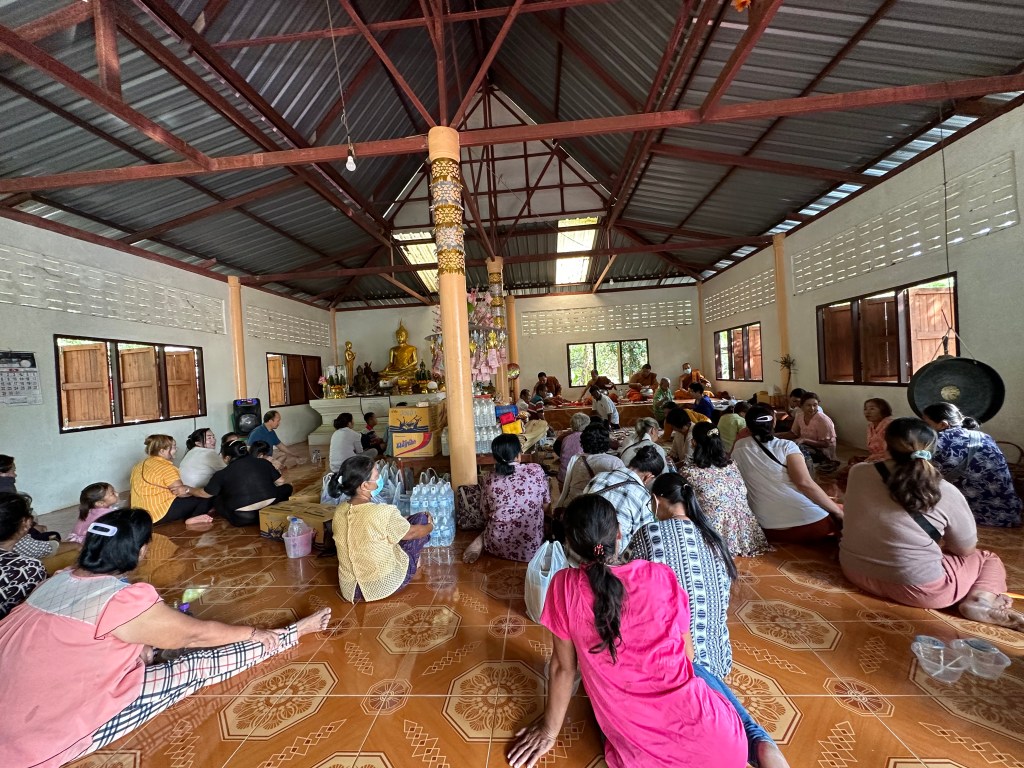
When I interviewed and shadowed Hmong women in Thailand, they casually shared horror stories, first-hand experiences involving mysterious figures, ghosts, haunting, and supernatural events. On a humid June afternoon, I observed a group of Hmong women in a rural village in Thailand as they prepared some monetary donations to a local Thai temple. Upon knowing my refugee background, an outspoken woman nicknamed “The Captain” asked where my house was before I resettled permanently in the U.S. I gave her the name of a well-known grandfather who lived nearby my family along with landmarks like the water site, the soccer field, and the pig pen. Most women and The Captain knew exactly where my house was.
“Did you know Paj?” The Captain asked. I told her I must have been too young to remember Paj. The Captain shared about how Paj died after she went swimming and her mother cried for days.
A Dragon Took Paj to be His Bride
Paj was a beautiful Hmong girl in Wat Thamkrabok. Everyone admired her beauty and would tirelessly stare at her flawless, glass skin. One day she went swimming and got chronically ill afterward. Her opium-addicted parents could not afford taking her to a hospital or to perform a shamanistic ritual for her. Paj eventually died and her mother cried for days. One day the mother took a nap and Paj visited her in her dream. In the dream, a giant snake entered the mother’s house and transformed into her daughter and told her to stop grieving. Paj told her mother she did not go anywhere, but that a dragon came and took her to be his bride. When the mother woke up, she stopped crying. She believed her daughter had visited her.
The story about Paj and her grieving mother is another example of the manifestation of transborder love in a supernatural occurrence. Paj reappeared in her mother’s dream to show her transborder love for her mother. In the afterlife, Paj heard her mother’s cries and felt both her love and pain. In return, Paj expressed her love for her mother by visiting and comforting her in her dream. Essentially, the mother’s dream of her deceased daughter, who is now in a different form of life, reinforces the idea that the daughter continues to live and raises a family in the spiritual world, which is still connected to the mother’s through dreams and other forms of the supernatural.
Crucially, however, what is embedded in Paj’s story is violence: displacement and capitalism. The Secret War1 displaced generations of Paj’s family. As refugees, Paj’s family was confined to the camp with little physical and economical mobility. Even in an emergency of her sudden illness, Paj did not receive help without the exchange of monetary currency. In a capitalist world where refugees exist at the margin of a society, the lack of financial capital or access to healthcare only worked against them. In Paj’s case, being displaced and being extracted from resources prevented her parents from saving her.

Research as a Journey Toward Healing
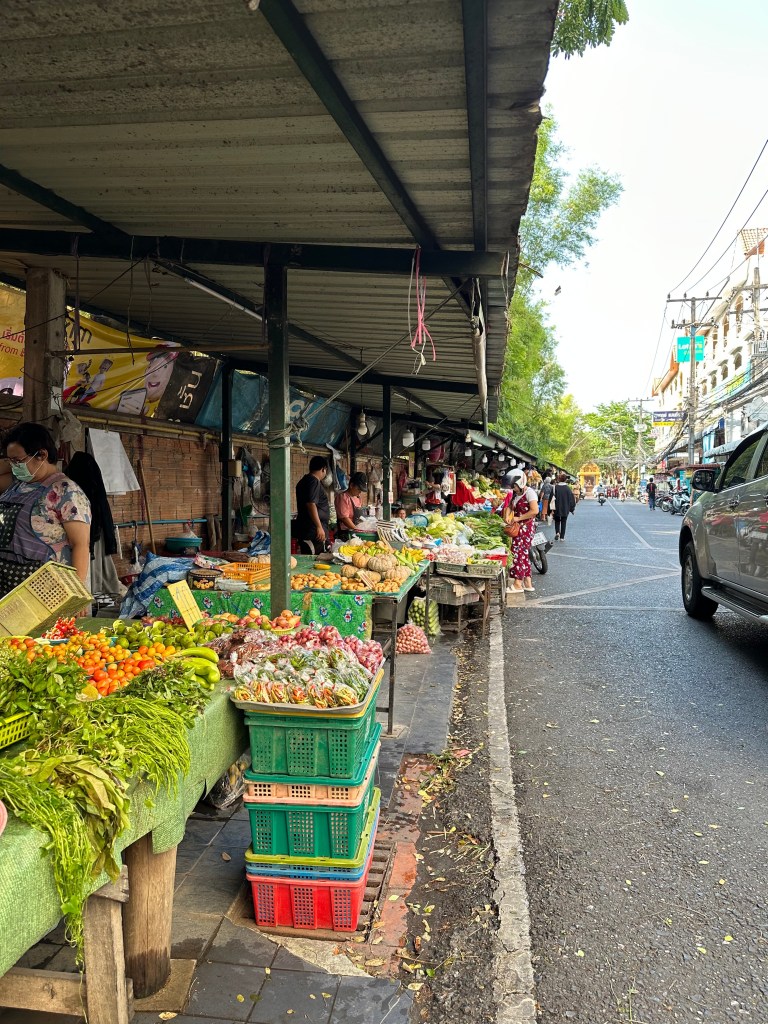
A year later, I recovered and journeyed to conduct research in Thailand. What are the chances that one would meet one’s childhood friend again after two decades? And, how slim are the chances when both of you are refugees? In summer 2023, I reconnected with a friend I met when I was ten. As refugee children, we were separated and later disconnected, just as our parents and their friends had been. Now, she has raised a beautiful family and has become a shaman. I saw her unexpectedly when I went to get dinner at a market. She invited me to her home.
Out of desire to reconnect, I sought her out for advice on how to reconcile traumatic experiences with Western medicine. She allowed me to share limited details about my life. She closed her eyes for a few seconds, nodded her head, opened her eyes, and walked me through what she saw. I was astonished when she detailed encounters I have never told anyone but my partner. As a shaman, just like my mother-in-law’s uncle, my friend already expected a visitor asking for help. She told me that Pog heard me and had visited me. But, because we have never met, she transformed and reappeared as my Yawg. My goose bumps grew more intense. I turned to my research assistant in disbelief.
My Medical Traumas
I had a series of countless visits to different medical departments for a period of several months. At the most recent Urgent Care visit, another provider, again, told me nothing was wrong with me; he thought my symptoms were made up. After being repeatedly told nothing was medically wrong, I stopped seeking medical help. Soon I could not walk from my bedroom to the bathroom and I was completely hopeless. Using American surgeon, Paul Kalanithi’s (2016) words, I was just “a pile of tissues” and no longer human in the eyes of those who dismissed my health complaints and denied further examination of my condition. My body was invisibilized as if I was a ghost that kept wandering healthcare facilities one after another for months. With the series of medical care rejections, I finally accepted death and set my mind on preparing for my own funeral. When my mother finally saw me in person, she insisted that I go to the Emergency Room (ER). Now at the ER, I was properly diagnosed and treated. There, I was told that had I waited just a little longer, my organs would start to fail and that would be the end of me.
Whether the figure I saw back in Minnesota was my deceased grandfather or grandmother from Laos, the Hmong way of knowing here is that the visit was an extension of a love that is so strong it transcends time and space; if I had left my grandmother a message on the phone, the visit was her attempt to return my call.
Hearing that Pog not only heard me but that she came to see me, the world seemed to suddenly stop spinning and everything else slowed down. My mind was full of thoughts and questions. I wished I could talk to Pog directly and ask her some of the questions that would help with my healing journey. My throat was so tense I could not speak. The tears that ran through my cheeks were unstoppable. Outside, the rain was also pouring. Suddenly, there were loud bangs against the front door; my friend’s husband opened the door and their three children were all wet in their student uniforms, blaming the parents for not giving them umbrellas. My friend was unbothered; she continued to consult me.
In many ways, it is the questions that I have wanted to ask my deceased grandmother that led me to research gender inequality within the family setting. Quite honestly, my scholarly work is an attempt to trace my own roots and to heal from the wounds that have plagued, for generations, my people, especially Hmong women. With the types of questions I ask in my research, I have unknowingly carried my grandmother’s legacy with me all along into my processes of knowledge reproduction and into the academy.
Questions I Wanted to Ask My Pog:
- What was life like when you grew up?
- Did you grow up playing with cassava leaves as your childhood dolls?
- How did you wear your hair?
- How many siblings did you have?
- Did you resemble more of your mom or your dad?
- What were in your mind as you worked in the rice field all day?
- How did you process your own traumas being born a Hmong woman and later a wife to an uncaring Hmong man?
- Have you been reunited with your mother and sisters now?
Similar to Paj and other Hmong women in my research, my calling for my grandmother was made when I was in a dire situation and needed to be liberated and to feel that I was powerful. This calling of my ancestors shows my transborder love for them but also my expectation of theirs. In this sense, transborder love is similar to what Xiong (2023) called “ancestral magic,” which is the protection given by an ancestor to protect the descendants when in danger but also when oppressed. In a similar fashion, transborder love binds the living and the dead together, but through a gendered relation. Because this love is borne out of empathy for each other due to having encountered similar patriarchal violence and injustices, its logic is to spiritually connect women from different generations together, thereby bypassing any restrictions, including patriarchal restrictions and assignments of Hmong women’s belonging. Radically, transborder love unbound Hmong women from clanship ties. Put differently, most Hmong women continue to relive the lives and struggles of their predecessors, like grandmothers, mothers, aunts, and sisters. So, transborder love functions as a thread that weaves them together across time and throughout the multidimensional space in ways that allow them to feel liberated however constrained.
When a Hmong-centric theoretical framework is engaged, it leads us to a more liberating and empowering narrative (Vue 2023). To theorize Hmong experiences and to create liberating narratives, Vue and Mouavangsou (2021) argue, require a Hmong epistemology standpoint. Taking on these pioneers’ posits, I have examined Hmong women’s encounters with the supernatural through a Hmong-centric lens in theorizing transborder love. In other words, the supernatural that embodies transborder love is a Hmong-centric way of reproducing knowledge about Hmong people. In centering and normalizing the supernatural, I contend that supernatural manifestations are complex lived experiences that pinpoint instances of violence that are seemingly invisible. However, once we dissect these complex lived experiences and name the violence, the hidden becomes visible, therefore allowing one to reconstruct one’s narratives in ways that are freeing.
In fact, most of the Hmong women I talked to already analyzed and made sense of their own encounters with supernatural events. Some explicitly interpreted supernatural manifestations they encountered as a form of love where the deceased continue to watch over them and shield them from harm’s way2. The narrative that one is loved and protected is liberating, especially in a world where Hmong women are faced with countless constraints, may it be chronic illnesses, infertility, capitalism, displacement, statelessness, and racism or ethnicism, but especially more so patriarchal violence.
Thinking from Within and With Hmong
When it comes to the debate on the supernatural, arguably, one could pick up the Diagnostic and Statistical Manual of Mental Disorders (DSM) and start checking the boxes to see which characteristics of a particular abnormal behavior research participants in my study or I exhibited. But, that is the very Western-oriented action I seek to disrupt and depart from. Shifting from racialized Western psychology of the supernatural as superstitious and schizophrenic, I argue that supernatural encounters offer another way to re-examine violence through a Hmong-centric framework. Departing from the view of the supernatural as a pathology, I critically engaged with supernatural manifestations to theorize a loving relationship between the dead and the living to satisfy the hunger for the types of research that are rejuvenating and healing.
Onto a Healing Closure
Although Western medicine finally intervened in my illness, my healing journey started after I recovered. All along the way, the outpouring love from families lifted up my spirits. My mother-in-law exhausted what she knew about herbal and spiritual healings. My parents exhausted their social network, looking for community resources. My mother’s mother advised how I must live my life as a married Hmong woman who has no children and how to circumvent patriarchy’s exploitation of my labor and wealth. My father’s “mother” visited me because she knew violence transgressed my body in the form of medical care rejections. Together, I healed alongside these Hmong women who shared their stories for my research.
Overall, supernatural events are filled with knowledge about acts of violence and injustices. At the same time, the supernatural makes visible the endless love between Hmong women. Supernatural beings are associated with the unknown and thus bring the most intense emotion: fear. However, when we treat supernatural manifestations as complex lived experiences, we come to appreciate their logics and the ways how they make us pause, step back, and reflect on our lived experiences as we grasp our arduous presence while holding dearly onto our ancestors to collectively heal from contemporary and historical traumas.

References
Kalanithi, P. (2016). When breath becomes air (First edition). Random House.
Vue, P. N. (2023). Hmong narratives as testimony. Journal of Southeast Asian American Education & Advancement, 18(2). https://doi.org/10.7771/2153-8999.1303
Vue, R., & Mouavangsou, K. N. (2021). Calling our souls home: A Hmong epistemology for creating new narratives. Asian American Journal of Psychology, 12(4), 265–275. https://doi.org/10.1037/aap0000273
Xiong, C. P. (2023). Ancestral magic. Retrieved December 16, 2023. https://www.anthropology-news.org/articles/ancestral-magic/?fbclid=IwAR29A9rI53jkTpAXXzPOnmn6ccLlKiqeVhQbGWA87CHeYiGAO4d92RFCVBM
Acknowledgements
My research in Thailand was supported by the Social Justice Hmong Studies Research Grant and the Beverly & Richard Fink Summer Research Fellowship. I want to thank my friends Cua Thoj and Kab Lia Muas, for initially helping me with tracing the injustices and violence that are embodied in horror stories, which led to my theorization of transborder love. I also wish to thank the following individuals for providing feedback on earlier drafts of this essay: Professors Choua Xiong, Chong Moua, May Kao Xiong, Alex Hopp, Kaozong Mouavangsou, and Ong Thao. This writing would have not been published without the support and guidance from my editors. So, thank you, John Dieck and Antavia Paredes-Beaulieu!
Footnotes
- The Secret War is a CIA covert operation in Laos, where Hmong men and boys were recruited to serve as guerillas to fight on behalf of the U.S. ↩︎
- Also see for example a podcast on Lady In Hmoob Clothes ↩︎